



Introduction
With the rapid expansion of industrial activities and increasing global awareness of environmental and occupational health, polycyclic aromatic hydrocarbons (PAHs) have become a major focus of scientific and regulatory attention. 1-Hydroxypyrene(CAS:5315-79-7), a primary metabolite of pyrene, is internationally recognized as a reliable indicator of PAH exposure. In modern industrial systems, 1-Hydroxypyrene plays a crucial role in environmental monitoring, analytical testing, and applied industrial research.
As industries seek more accurate tools to evaluate environmental impact and human health risks, the importance of 1-Hydroxypyrene continues to grow.
Chemical Properties and Industrial Significance of 1-Hydroxypyrene
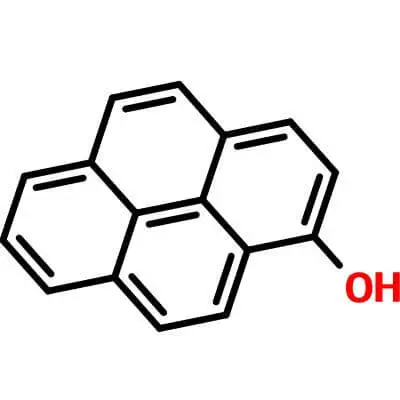
1-Hydroxypyrene has the molecular formula C₁₆H₁₀O and represents a hydroxylated derivative of pyrene. The introduction of a hydroxyl group at the 1-position enhances both its chemical reactivity and analytical detectability.
From an industrial and laboratory perspective, 1-Hydroxypyrene exhibits several valuable characteristics:
High structural stability
Good solubility in common organic solvents
Strong and consistent fluorescence properties
These features make 1-Hydroxypyrene particularly suitable for high-precision analytical techniques and long-term industrial research applications.
Key Applications of 1-Hydroxypyrene in Modern Industry
Environmental and Occupational Exposure Monitoring
Many industrial processes, including fossil fuel combustion, metallurgical operations, petrochemical manufacturing, and waste incineration, generate significant amounts of PAHs. 1-Hydroxypyrene is widely used to assess human and environmental exposure resulting from these activities.
By measuring urinary concentrations of 1-Hydroxypyrene, industries and regulatory bodies can:
Evaluate cumulative PAH exposure in workers
Compare exposure levels across different industrial processes
Assess the effectiveness of workplace safety and control measure
As a result, 1-Hydroxypyrene has become a standard biomarker in occupational health and environmental risk assessments.
Analytical and Laboratory Applications
In analytical chemistry, 1-Hydroxypyrene is commonly used as a reference standard for the quantitative analysis of PAH metabolites. It is compatible with multiple advanced analytical platforms, including:
High-Performance Liquid Chromatography (HPLC)
Liquid Chromatography–Mass Spectrometry (LC-MS/MS)
Fluorescence-based detection systems
Thanks to its reproducibility and strong signal response, 1-Hydroxypyrene supports accurate detection even at trace concentration levels, making it indispensable in modern analytical laboratories.
Industrial Research and Material Science Studies
Beyond monitoring and analysis, 1-Hydroxypyrene is increasingly applied in industrial research and material science. Its aromatic framework and fluorescence sensitivity enable its use in:
Molecular interaction and reaction mechanism studies
Microenvironment polarity and chemical behavior analysis
Fundamental research related to organic functional materials
These research applications help bridge basic chemistry with advanced industrial innovation.
Safety, Compliance, and Industry Trust
From an EEAT standpoint, 1-Hydroxypyrene is supported by extensive scientific literature and long-term industrial use. High-quality industrial-grade 1-Hydroxypyrene is typically supplied with:
Verified purity and batch traceability
Complete analytical documentation
Compliance with laboratory and industrial safety standards
When handled according to established chemical safety protocols, 1-Hydroxypyrene is considered reliable and safe for professional use in research and industrial environments.
Future Development Trends of 1-Hydroxypyrene
As environmental regulations become more stringent and analytical technologies continue to advance, the future development of 1-Hydroxypyrene is expected to accelerate:
Stricter environmental and occupational standards
Driving broader adoption of 1-Hydroxypyrene in exposure assessment programs
Advances in high-sensitivity analytical methods
Expanding the use of 1-Hydroxypyrene in ultra-trace and multi-analyte detection
Integration of industrial research and sustainability goals
Supporting innovation in environmental chemistry, health monitoring, and green industry development
These trends indicate that 1-Hydroxypyrene will remain a key compound in industrial and environmental science for years to come.
Conclusion
1-Hydroxypyrene(CAS:5315-79-7) occupies a unique and indispensable position at the intersection of industrial activity, environmental monitoring, and human health assessment. With its well-defined chemical properties, strong analytical performance, and global scientific acceptance, 1-Hydroxypyrene has become a cornerstone compound in modern industrial applications. Looking ahead, its role is expected to expand further as industries pursue higher standards of safety, sustainability, and data accuracy.
Ready to Accelerate Your Research?
For technical datasheets, sample requests, or customized catalyst solutions, contact the UIV CHEM technical support team today. Let us help you achieve breakthrough results in organic synthesis and materials innovation!